 European Union
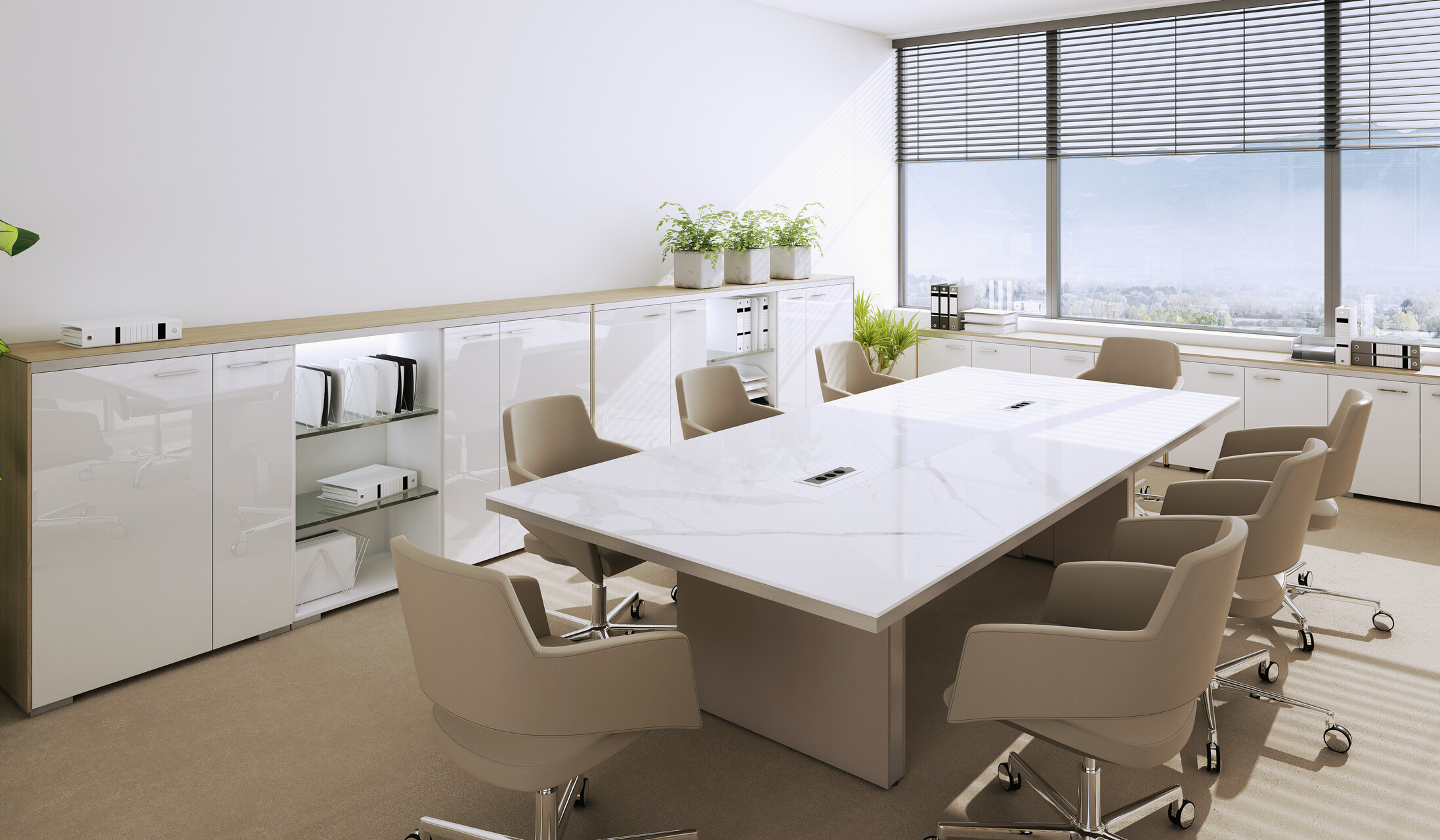
The current reality and the space in which we make many important decisions can unfortunately be overwhelming, among other things due to the excess of stimuli coming from the surroundings, the accumulation of objects, the multitude of information, or even inappropriate colors and workplace equipment. That is why the concept of minimalism in the office refers not only to aesthetic aspects, but above all to awareness – awareness in the approach to designing a workspace in such a way as to eliminate excessive chaos and stimuli, and focus on simplicity and naturalness. The space in which we spend a lot of time should support functionality and not limit or block it. The goal of minimalism is to improve work comfort and enhance efficiency by reducing all excess and “distractions”.
Minimalism in the office
Minimalism in the office means reduction and simplicity. Reduction of what distracts, what is unnecessary; however, it is worth emphasizing that it is not about empty, intimidating sterile rooms or lack of comfort – but about greater awareness in the arrangement of space so that it includes essential elements that support team work. These may include properly selected furniture and a consistent, uniform color scheme. Every element in the space should have its proper purpose and support the needs of employees. In short, the workplace should enhance employee ergonomics rather than be characterized by a multitude of diverse equipment. Due to the changing nature and style of work, where maximum concentration is required – it is the orderly, minimalist space that will provide the employee with the right environment. By the right environment, we mean one that supports proper focus while being a key element of a modern office, taking into account its individuality.
Work comfort
In a minimalist office, usability plays a significant role. Properly designed work environments significantly affect comfort, but also the health of employees, for example in terms of maintaining correct posture during long hours of work, well-being, or enabling movement and change of position. A perfect example can be the Lano-E 300 P Bench desk, an innovative sit-stand solution that combines the comfort of sitting and standing work with elegant design. Thanks to this, we are not limited, but on the contrary, we move forward towards new possibilities.
A minimalist desk as the foundation of the workplace
One of the key elements in an office space is the desk. This is where you can start introducing minimalism. A properly organized and tidy desk certainly facilitates planning as well as working with full focus. Limiting the number of items on the desktop undoubtedly clears the mind while stimulating it to act.
Minimalist desk
A minimalist desk should be characterized by solutions that primarily make it easier to maintain order in the workplace while preserving the aesthetics and functionality of the space. Less means more. The fewer so-called distractions, the more possibilities and creativity. In short, a desk is not only a place to work – it is a showcase that presents personality and individuality, and also forms the foundation of good workplace organization. In the MARO offer, you can find many desks that meet these criteria, combining simple yet elegant design with practicality, which perfectly fits into the concept of minimalism. An interesting model is the A-em line – desks with a subtle, delicate structure and an original base that perfectly emphasize the minimalist character of the space while ensuring stability and comfort. Other interesting models fitting into the modern minimalist trend are desks from the Op-Lite I O category. Thanks to light, metal legs and modern design, the space remains open and visually clean while being максимально functional. Moreover, it can be adapted depending on individual requirements and preferences. The above solutions once again show that minimalism is not about giving up functionality, but quite the opposite – a properly selected and well-thought-out desk will provide more comfort and usability.